
How Digital Marketing Works: A Beginner-Friendly Explanation
Learn how digital marketing works step by step, including its main channels, strategies, and practical tips for beginners.
DIGITAL MARKETING ESSENTIALS
MUHAMMAD TARIQ
2/15/202614 min read
1. Introduction: Why Understanding How Digital Marketing Works Matters
Digital marketing is no longer an optional extension of business strategy. It is the central system through which brands communicate, attract, and retain customers. To understand how digital marketing works is to understand how modern buying decisions are shaped. For beginners, this knowledge builds clarity. It prevents random posting, wasted ad spend, and unfocused campaigns.
The Shift from Traditional to Digital Channels
For decades, businesses relied on television, radio, newspapers, billboards, and direct mail. These traditional marketing channels were broad in reach but limited in precision. A company could place an advertisement in a newspaper, yet it had little control over who actually saw it or how they responded. Measurement was slow and often indirect.
Digital marketing changed this structure. Platforms such as search engines, social media networks, email systems, and websites allow businesses to target specific audiences based on age, interests, behavior, and intent. When someone searches on Google, scrolls through Facebook, or watches content on YouTube, their actions generate data. That data helps marketers understand what people want, when they want it, and how they prefer to engage.
This shift from mass broadcasting to targeted communication is the foundation of digital marketing. Businesses no longer speak to everyone. They speak to the right people at the right time with measurable results. This precision improves efficiency, reduces cost, and increases return on investment.
Why Beginners Should Learn the Mechanics, Not Just the Tools
Many beginners focus only on tools. They learn how to run ads, design posts, or schedule content. While these skills are useful, they are incomplete without understanding the underlying system. Digital marketing operates through a clear process: attract traffic, engage visitors, convert leads, and build long-term relationships.
Without understanding this process, beginners often mistake activity for progress. Posting daily on social media does not guarantee conversions. Running paid ads without a defined audience does not guarantee sales. The mechanics of digital marketing include audience research, keyword intent, content strategy, conversion optimization, and performance tracking. These elements determine whether a campaign succeeds.
Learning how digital marketing works means understanding the connection between strategy, execution, and data. Tools may change over time, but the principles remain stable. A beginner who understands these principles can adapt to new platforms, algorithms, and trends with confidence.
In simple terms, digital marketing is not about being present online. It is about building a structured system that attracts the right audience, guides them through a decision process, and measures every step along the way. That is why understanding how digital marketing works is the first and most important step for anyone entering this field.
2. What Is Digital Marketing? A Quick Refresher
"Digital marketing refers to the use of online channels, digital technologies, and internet-based platforms to promote products or services to a defined audience. It includes search engines, social media platforms, websites, email campaigns, and paid advertisements."
Unlike traditional marketing, which relies on print media, television, or outdoor advertising, digital marketing allows businesses to communicate directly with users who are actively searching for information or solutions. Its core objective is precise targeting: reaching the right audience at the right time with relevant content. Through data analytics and user behavior tracking, businesses can measure performance, adjust campaigns, and improve results in real time. This measurable and targeted approach is what distinguishes digital marketing from traditional methods, making it more efficient, adaptable, and aligned with modern consumer behavior.
3. The Core Components of Digital Marketing
Social Media Marketing (SMM)
Search Engine Optimization (SEO)
Content Marketing
Pay-Per-Click Advertising (PPC)
Affiliate and Influencer Marketing
Search Engine Optimization, commonly known as SEO, is the process of improving a website so that it ranks higher in organic search results. When users type queries into Google or Bing, search engines analyze thousands of pages and display the most relevant results. SEO helps your website appear among those results without paying for ads.
SEO works through three main areas: on-page SEO, off-page SEO, and technical SEO. On-page SEO focuses on optimizing content, keywords, headings, internal links, and meta descriptions. Off-page SEO involves building authority through backlinks from other websites. Technical SEO ensures that your site loads quickly, works on mobile devices, and can be properly indexed by search engines.
The goal of SEO is to attract high-intent traffic. Users who search for specific terms already have a need or problem. By aligning your content with relevant keywords, you connect your business with people actively looking for your solution. Over time, strong SEO builds credibility, consistent traffic, and long-term visibility.
Social Media Marketing uses platforms such as Instagram, Facebook, LinkedIn, and TikTok to promote products, services, or brand messages. Unlike search engines, where users actively search for information, social media introduces content into users’ daily browsing habits.
SMM works by creating engaging content that attracts attention, encourages interaction, and builds relationships. This includes posts, videos, stories, live sessions, and community discussions. Businesses can use organic strategies to grow their audience or paid advertising to target specific demographics and interests. The strength of social media marketing lies in engagement. Likes, comments, shares, and direct messages create two-way communication between brands and customers. Over time, consistent social media activity increases brand awareness, trust, and customer loyalty.
Content marketing is the strategic creation and distribution of valuable information to attract and retain a clearly defined audience. Instead of directly promoting a product, content marketing focuses on educating, informing, or solving problems. Examples include blog articles, videos, infographics, podcasts, and guides. High-quality content answers common questions, addresses pain points, and builds authority within a specific niche. When optimized with relevant keywords, content also supports SEO by improving search engine visibility.
Content marketing works because modern consumers research before making decisions. By providing helpful information, businesses position themselves as trusted sources. This trust increases the likelihood that readers will convert into customers. In digital marketing, content is often the foundation that supports all other channels.
Email Marketing
Email marketing involves sending targeted messages directly to a subscriber’s inbox. Despite the rise of social platforms, email remains one of the highest-return digital marketing channels.
Businesses collect email addresses through website forms, lead magnets, or purchases. They then send newsletters, promotional offers, product updates, or educational sequences. Platforms like Mailchimp and ConvertKit help automate and personalize these campaigns.
Email marketing works because it builds direct communication. Unlike social media, where algorithms control visibility, email reaches subscribers more reliably. It is especially effective for nurturing leads, encouraging repeat purchases, and maintaining long-term customer relationships
Pay-Per-Click advertising is a paid digital marketing strategy in which advertisers pay a fee each time someone clicks on their ad. Unlike SEO, which focuses on organic traffic, PPC provides immediate visibility.
Common PPC platforms include Google Ads and Meta Ads. Businesses can target users based on keywords, interests, demographics, or online behavior. Ads may appear in search engine results, social media feeds, or partner websites.
PPC works best when combined with strong landing pages and clear calls to action. It is measurable, flexible, and scalable. Companies can adjust budgets, pause campaigns, and optimize targeting based on performance data. When managed correctly, PPC can generate quick leads and sales.
4. The Digital Marketing Funnel Explained
Awareness Stage
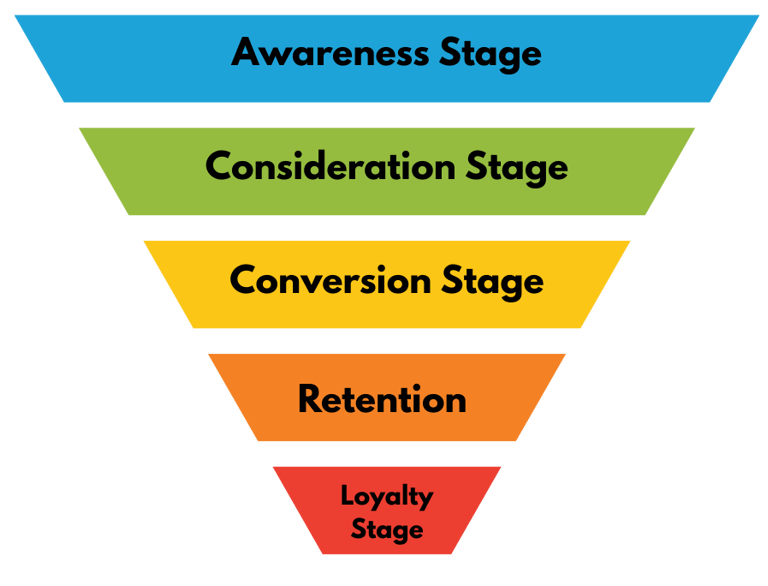
The digital marketing funnel is a structured model that explains how potential customers move from first discovering a brand to becoming loyal advocates. It reflects the psychological journey behind every purchase decision. Rather than focusing only on sales, the funnel highlights each stage of engagement and the role digital channels play at every step.
Understanding the marketing funnel helps businesses create targeted content, allocate budgets wisely, and measure performance with clarity. Each stage has a different objective, and each requires a different strategy.
Consideration Stage
Conversion Stage
Tracking User Behavior
The Awareness stage is the top of the funnel. At this point, potential customers recognize a problem or need, but they may not yet know about your brand. The primary goal here is visibility.
Businesses use channels such as SEO, social media marketing, blog content, and paid ads to introduce their brand to a relevant audience. For example, when someone searches for information on Google or scrolls through Instagram, they encounter educational articles, short videos, or helpful posts.
Content at this stage should inform rather than sell. Blog guides, infographics, short-form videos, and awareness campaigns are effective. The focus is on answering questions and building recognition. Metrics such as website traffic, impressions, reach, and engagement rate indicate performance.
In simple terms, the Awareness stage ensures that the right people know your brand exists.
In the Consideration stage, users already understand their problem and begin comparing possible solutions. They evaluate brands, read reviews, watch demonstrations, and seek deeper information.
This stage requires more detailed content. Case studies, product comparisons, email newsletters, webinars, and explainer videos are common strategies. Businesses may use retargeting ads to reconnect with users who visited their website but did not take action.
Trust becomes essential at this level. Testimonials, social proof, and transparent communication reduce hesitation. SEO also plays a role here through comparison keywords and solution-based searches.
Key performance indicators include time spent on site, email sign-ups, content downloads, and repeat visits. The objective is to move prospects closer to a confident decision.
The Conversion stage is where prospects take a desired action. This action may include purchasing a product, booking a consultation, filling out a form, or subscribing to a service.
At this level, clarity and simplicity matter most. Landing pages should have strong calls to action, clear benefits, and minimal distractions. Paid campaigns through platforms like Google Ads or targeted social media advertising can help capture high-intent users.
Trust signals such as guarantees, secure payment systems, and customer reviews improve conversion rates. Data analysis is critical. Marketers track conversion rate, cost per acquisition, and return on ad spend to evaluate success.
The focus is not just on generating traffic but transforming interest into measurable results.
Retention and Loyalty Stage
Many businesses focus heavily on acquiring customers but overlook retention. The Retention and Loyalty stage strengthens long-term relationships after the first purchase.
Email marketing, loyalty programs, personalized offers, and consistent communication maintain engagement. Platforms such as Mailchimp help automate follow-up sequences and nurture repeat customers.
Satisfied customers often become brand advocates. They leave reviews, share experiences on social media, and recommend products to others. This organic promotion feeds back into the Awareness stage, creating a continuous cycle.
Metrics at this stage include customer lifetime value, repeat purchase rate, and referral rate. Retention strategies typically cost less than acquiring new customers, making this stage vital for sustainable growth.
5. Role of Data and Analytics in Digital Marketing
Data and analytics form the backbone of effective digital marketing. Without measurable insights, marketing becomes guesswork. With data, it becomes a structured process guided by evidence rather than assumptions. Every click, visit, scroll, and purchase creates information. When properly analyzed, that information reveals what works, what fails, and where improvement is needed.
Digital marketing analytics allows businesses to understand audience behavior, optimize campaigns, and improve return on investment. It connects strategy with measurable performance.
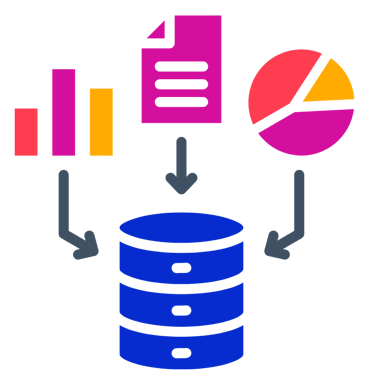
Tracking user behavior means observing how visitors interact with your website, ads, and content. This includes metrics such as page views, session duration, bounce rate, click-through rate, and conversion paths.
Tools like Google Analytics help marketers monitor traffic sources, user demographics, and on-site activity. For example, businesses can see whether visitors arrived through organic search, social media, paid ads, or direct links. They can also track which pages users visit most and where they leave.
Behavior tracking answers important questions. Are visitors finding the information they need? Are they dropping off before completing a purchase? Which content keeps them engaged?
By understanding these patterns, marketers can refine website structure, improve content quality, and enhance user experience. Instead of assuming why performance is low, they rely on actual behavioral data.
Data-Driven Decision Making
Data-driven decision making means using measurable insights to guide marketing strategies. Rather than launching campaigns based on intuition, businesses analyze performance indicators before making adjustments.
Key performance indicators, often called KPIs, include conversion rate, cost per click, cost per acquisition, and return on ad spend. Platforms such as Google Ads and Meta Ads Manager provide detailed reports that show how campaigns perform in real time.
For example, if one advertisement generates high traffic but low conversions, the issue may lie in the landing page rather than the ad itself. If one audience segment converts more frequently, budget allocation can shift toward that segment.
Data-driven marketing reduces waste. It helps allocate resources efficiently and improves overall performance. Over time, consistent analysis leads to smarter strategies and stronger results.
A/B Testing Fundamentals
A/B testing, also known as split testing, is a method used to compare two variations of a marketing element to determine which performs better. Marketers may test two versions of a headline, email subject line, advertisement, call to action, or landing page layout.
In an A/B test, one version is shown to half of the audience, and the other version is shown to the remaining half. Performance is measured based on a defined goal, such as click-through rate or conversion rate.
The principle behind A/B testing is simple. Small changes can significantly influence user behavior. A clearer headline, stronger call to action, or improved design can increase engagement and conversions.
The key to effective A/B testing is controlling variables. Only one element should change at a time. This ensures that results are accurate and reliable.
When combined with user behavior tracking and data-driven decision making, A/B testing becomes a powerful optimization tool. It transforms digital marketing into a continuous improvement process grounded in measurable evidence.
Digital marketing appears accessible. Anyone can create a social media account, publish a blog post, or launch an advertisement. Yet early enthusiasm often leads to avoidable mistakes. Most beginners struggle not because tools are complex, but because they overlook foundational principles. Understanding these common errors helps prevent wasted time, budget, and effort.
Ignoring Audience Research
Vanity metrics such as likes, shares, and follower counts feel rewarding. However, growth without sales, leads, or meaningful engagement does not sustain a business. Conversions, customer lifetime value, and cost per acquisition matter far more than surface-level popularity.
Focusing Only on Followers Instead of Conversions
Affiliate and influencer marketing are performance-driven approaches that allow brands to expand their reach through trusted third parties. Although they are often grouped together, their structure and intent differ. Affiliate marketing is built on measurable outcomes. Businesses partner with affiliates who promote products through blogs, websites, email lists, or social platforms. Affiliates earn a commission only when a defined action occurs, such as a sale or lead submission. This model reduces risk for brands because payment is tied directly to results.
Influencer marketing, by contrast, focuses on credibility and audience connection. Influencers build communities around specific interests, and their recommendations carry persuasive weight. Instead of operating purely on commission, influencers are often compensated through fixed fees, product exchanges, or long-term brand partnerships. The value lies not only in immediate conversions but also in awareness, perception, and trust.
When used strategically, both approaches complement broader digital campaigns. Affiliate marketing supports scalable revenue growth through trackable links and data analysis. Influencer marketing strengthens brand identity and emotional resonance with targeted audiences. Success depends on selecting partners whose audience aligns with the brand’s positioning and ensuring transparent communication. Together, these channels offer businesses a practical way to grow visibility while maintaining accountability and measurable performance.
No clear positioning


Many beginners skip deep research and rely on assumptions. They promote products without understanding customer pain points, buying triggers, or objections. Without clarity about who the audience is and why they buy, campaigns lack direction and relevance.
New marketers often try to serve everyone. Without a defined niche or value proposition, their messaging becomes generic and forgettable.
Inconsistent branding and messaging
Switching tones, visuals, and offers too frequently weakens credibility. Consistency builds recognition and trust over time.
6. Mistakes New Digital Marketers Often Make
Not tracking performance properly
Some launch campaigns without setting measurable goals or tracking key metrics. Decisions then rely on opinion rather than data.
Over-reliance on paid ads
Paid campaigns can generate quick traffic, but without strong fundamentals such as offer clarity and landing page optimization, budgets are wasted.
Lack of patience and long-term thinking
Digital marketing compounds. Beginners often quit or pivot too quickly before allowing strategies like SEO, email marketing, or content marketing to mature.
7. Building an Effective Digital Marketing Strategy
An effective digital marketing strategy begins with clear objectives. Businesses must define whether their goal is brand awareness, lead generation, sales growth, or customer retention. Without defined objectives, campaigns lose direction, and performance becomes difficult to measure.
The next step is identifying a specific target audience. This includes understanding demographics, interests, online behavior, and purchase intent. Audience clarity ensures that messaging aligns with real needs rather than assumptions. A defined audience also improves ad targeting, keyword selection, and content relevance.
Channel selection follows strategy, not preference. SEO supports long-term organic visibility. Social media marketing builds engagement and brand awareness. Email marketing nurtures relationships. PPC advertising generates immediate traffic. Each channel should serve a purpose within the broader digital marketing funnel.
Content planning is essential. Businesses should create educational, persuasive, and trust-building content aligned with each funnel stage. Consistency in tone, visuals, and messaging strengthens brand positioning.
Finally, strategy requires ongoing optimization. Digital marketing is not static. Campaign performance must be reviewed regularly using analytics data. Adjustments to targeting, messaging, budget allocation, and creative assets ensure continuous improvement. A structured strategy transforms scattered efforts into measurable growth.
8. How Digital Marketing Works Together as an Integrated System
Digital marketing functions best when channels support one another rather than operate independently. SEO may attract visitors to a blog article. That article can encourage email subscriptions. Email campaigns can nurture subscribers and guide them toward a sales page. Retargeting ads can re-engage visitors who did not convert. Each component reinforces the others.
Content marketing often acts as the foundation. High-quality content drives organic search traffic and fuels social media posts, email campaigns, and paid promotions. Social media marketing increases content distribution. PPC advertising accelerates exposure for high-performing pages. Email marketing maintains long-term engagement after the first interaction.
Integration also improves data clarity. When tracking systems connect website analytics, advertising platforms, and email software, businesses gain a complete view of the customer journey. This unified perspective reveals how prospects move from awareness to conversion.
An integrated digital marketing system reduces inefficiency. Instead of isolated campaigns competing for attention, each channel contributes to a shared objective. Over time, this alignment produces consistent brand visibility and stronger return on investment.
9. The Future of Digital Marketing and AI Influence
Digital marketing continues to evolve alongside technology. Artificial intelligence, automation, and predictive analytics are reshaping how campaigns are created and optimized. Search engines increasingly rely on machine learning to interpret intent rather than simple keyword matching. Social media platforms use algorithms to personalize content feeds. Advertising platforms automate bidding strategies based on performance data.
AI tools now assist with content generation, customer segmentation, and performance forecasting. Chatbots provide instant customer support. Recommendation systems personalize product suggestions. These innovations improve efficiency and user experience.
However, core principles remain unchanged. Clear positioning, valuable content, audience understanding, and ethical communication still determine long-term success. Technology enhances execution, but strategy guides direction.
Businesses that understand how digital marketing works at a foundational level can adapt to technological change. Rather than reacting to every new tool, they evaluate whether innovations align with strategic objectives. The future will reward marketers who combine data literacy with creative clarity.
Understanding how digital marketing works provides structure in a rapidly changing environment. It shifts focus from isolated tactics to a connected system built on strategy, audience insight, content value, and measurable performance.
Digital marketing is not simply about publishing posts or running advertisements. It is about guiding potential customers through a deliberate journey from awareness to loyalty. Each stage requires specific content, clear communication, and careful analysis.
Beginners who study the mechanics rather than chasing trends develop lasting competence. They recognize that sustainable growth depends on consistent execution, thoughtful experimentation, and data-driven refinement.
In practical terms, digital marketing succeeds when businesses deliver relevant information to the right audience at the right moment and evaluate results with discipline. Mastering this process allows brands to compete effectively in an increasingly digital marketplace.
10. Conclusion: Mastering the Process Behind Digital Marketing
Author: